PERIPHERAL NERVE BLOCK

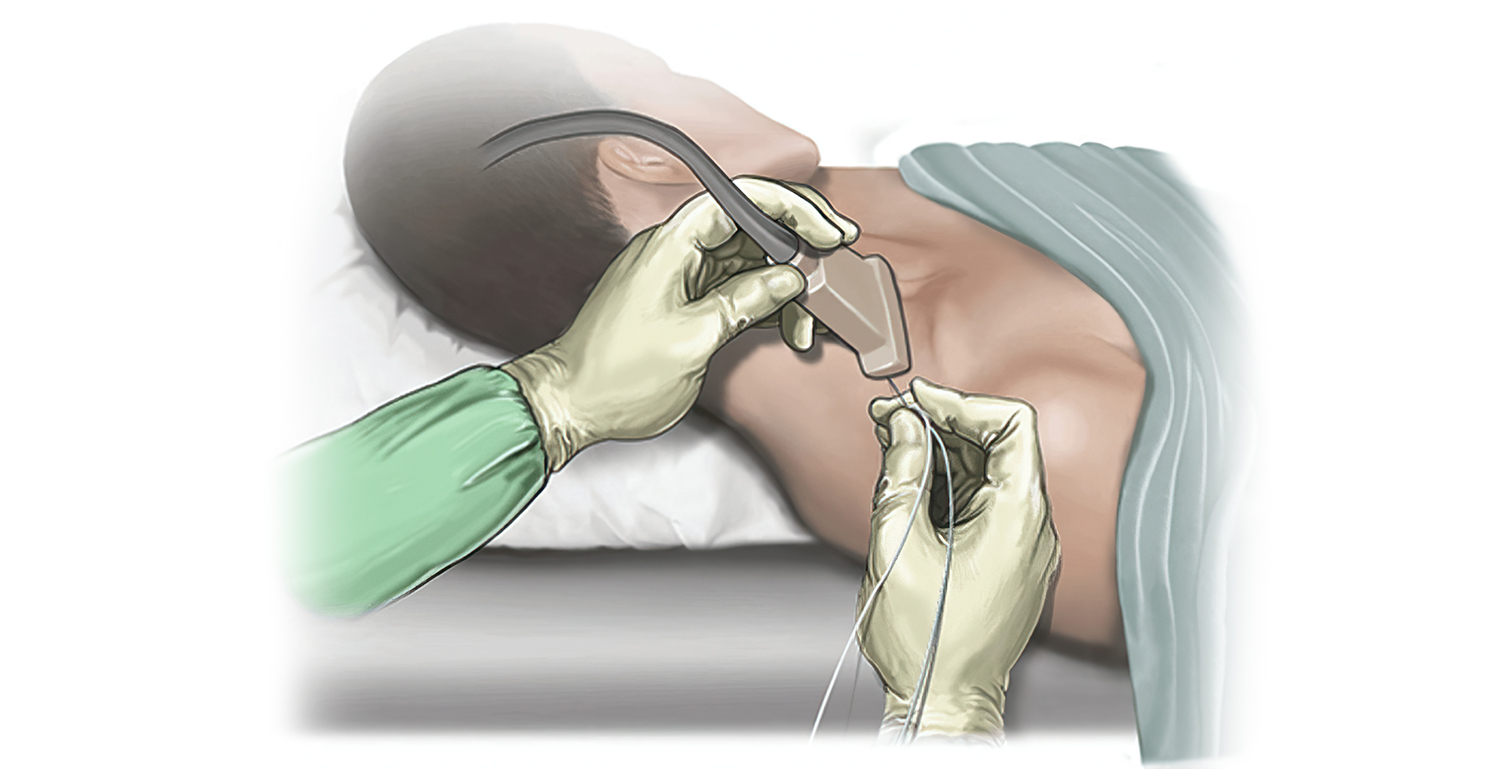
Medical illustration of a nerve block injection for spinal pain

Peripheral nerve blocks are a type of regional anesthesia. The anesthetic is injected near a specific nerve or bundle of nerves to block sensations of pain from a specific area of the body.

Nerve blocks usually last longer than local anesthesia. They are most commonly used for surgery on the arms and hands, the legs and feet, or the face.

Diagnostic ultrasound being performed on a patient

Positioning the needle during a nerve block may result in touching the nerve being blocked with the tip of the needle. When this occurs, you may experience a sharp sensation like an electrical shock in the part of the body supplied by the nerve. Be sure to let your anesthesiologist know if you feel such a sensation.

Other medicines are often given with nerve blocks to make you relaxed or sleepy (sedatives) or to reduce pain. These are usually given as a pill or through a vein.

Close-up of medical syringes prepared for a nerve block injection

People are carefully watched during the procedure, because the anesthetics used for regional nerve blocks may affect the central nervous system, cardiovascular system, and respiratory system (airway and lungs) and may affect blood pressure, breathing, heartbeat, and other vital functions.

Nerve blocks may be most useful when the procedure:

  • Can be confined to a specific region of the body that can be anesthetized with a nerve block.
  • Involves large surface areas of the body where injection with a large volume of local anesthetic might cause side effects that affect the whole body.
  • Involves an area of the body where injection of a local anesthetic would cause distortions that might cause problems with the surgery, such as the face.
  • Can be done in a relatively short time. Nerve blocks may not last long enough for some procedures.
Medical illustration of a nerve block injection for spinal pain

Common Questions About Peripheral Nerve Blocks

What is a peripheral nerve block?

An injection of local anesthetic, sometimes with a steroid, placed close to a specific nerve outside the spinal canal in order to interrupt the pain signals it is carrying. It is performed with image guidance so the medication is delivered accurately to the target nerve.

Is a nerve block a test or a treatment?

It can be both. If the pain settles substantially while the anesthetic is working, that identifies the nerve responsible, which is diagnostically useful even if the relief is temporary. Where a steroid is included, the aim is also to reduce inflammation around the nerve and give longer-lasting relief.

How long does a nerve block last?

The anesthetic effect wears off within hours. Where a steroid is used, any longer benefit typically develops over several days and can last from weeks to months. It is normal for pain to return briefly as the anesthetic wears off before the steroid takes effect, and that does not mean the block has failed.

What are the risks of a nerve block?

Soreness or bruising at the injection site is common. Temporary numbness or weakness in the area supplied by the nerve is expected and resolves as the anesthetic wears off. Less common risks include bleeding, infection, an allergic reaction to the medication, and, rarely, lasting nerve irritation. Steroids can raise blood sugar for a few days, which matters if you are diabetic.

What happens after a nerve block?

You are observed for a short period before going home, and you should arrange for someone to drive you if you have had sedation or if a limb is numb. Keeping a simple record of how your pain behaves over the following days is genuinely useful, because the pattern of relief is what guides the next step in your care.


Call Us Today