
MEDIAL BRANCH BLOCK


Common Questions About Medial Branch Blocks
What is a medial branch block?
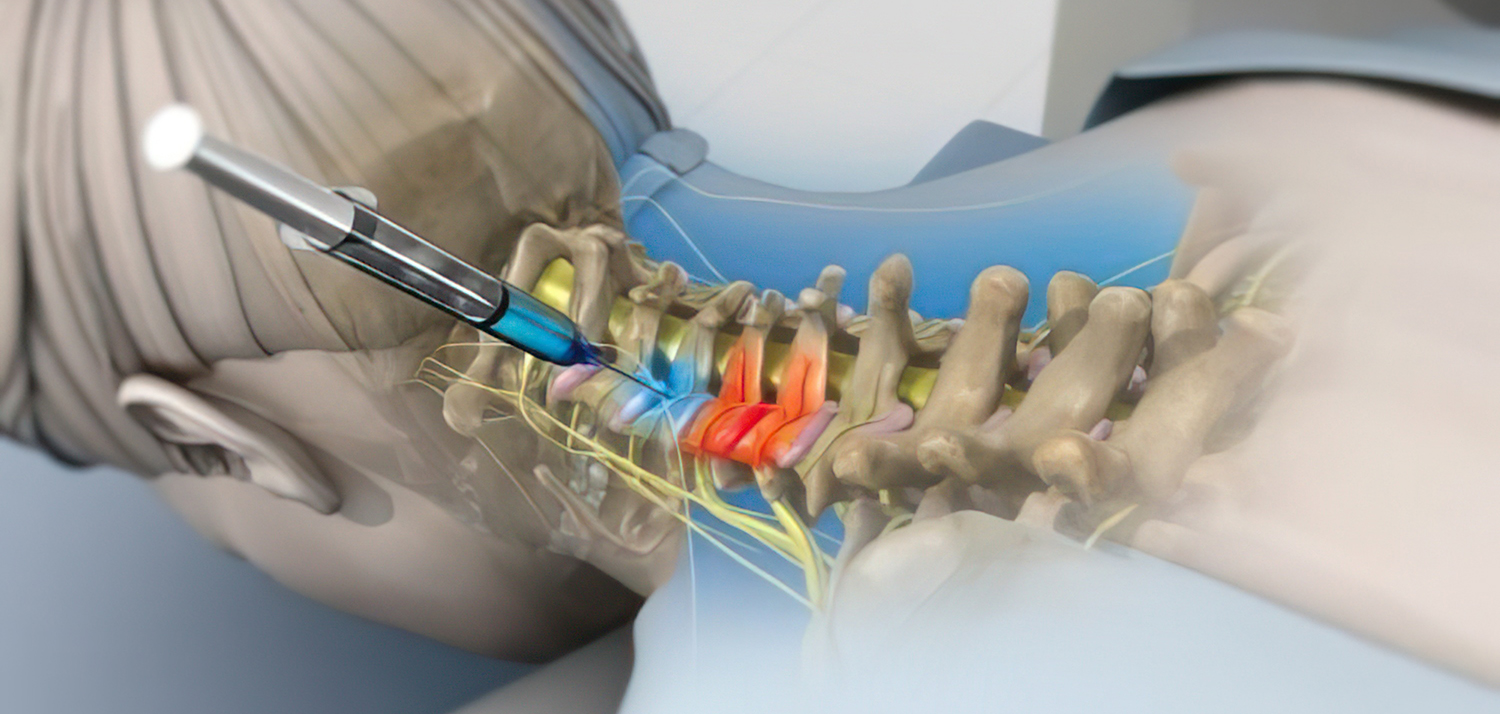
An injection of local anesthetic around the medial branch nerves, the small nerves that carry pain signals from the facet joints at the back of the spine. It is used primarily to establish whether those joints are the source of your pain, because facet pain cannot be confirmed from imaging alone.
How is a medial branch block performed?
With image guidance, so the needle is placed precisely at the target nerve. The skin is numbed first, and the injection itself takes only a few minutes per level. You stay awake so that you can report how your pain responds, which is the point of the procedure.
What does a positive medial branch block mean?
If your usual pain reduces substantially while the anesthetic is working, that points to the facet joints at the level tested as the source. A positive response is what identifies candidates for radiofrequency ablation, which targets the same nerves for much longer-lasting relief. Physicians often repeat the block to confirm the finding before proceeding.
How long does the relief last?
Usually only hours, because the block is diagnostic rather than therapeutic. That short duration is not a failure of the procedure. What matters is how much your pain reduced during that window and whether the pattern matched your usual pain.
What are the risks of a medial branch block?
Injection-site soreness and bruising are common. Temporary weakness or numbness in the area can occur while the anesthetic is active. Bleeding, infection and allergic reaction are uncommon. Tell your physician if you take anticoagulants, have an active infection, or are diabetic, since steroid use can raise blood sugar for several days.