SPONDYLOLISTHESIS
What is Spondylolisthesis?
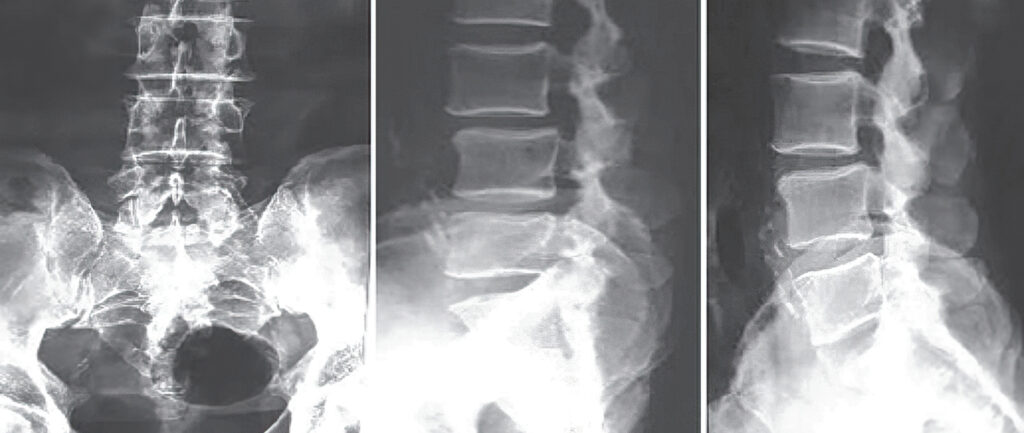
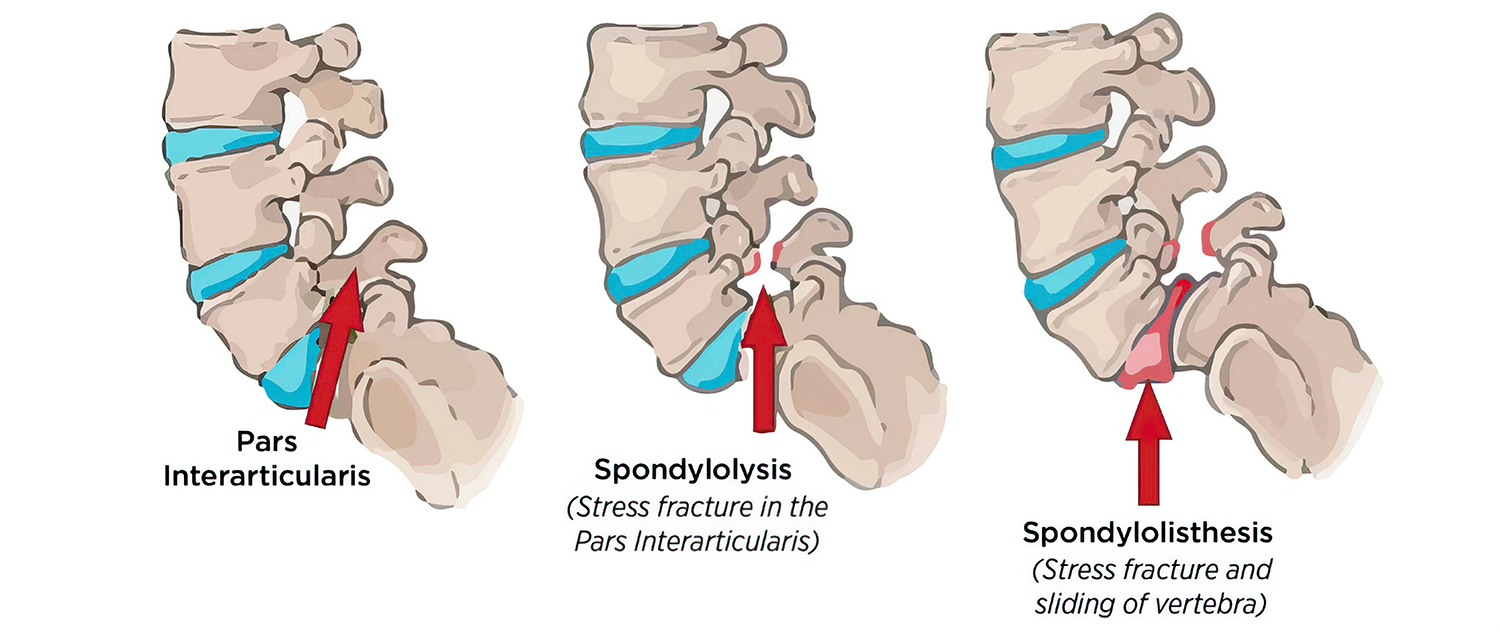
Spondylolisthesis is defined as a slip of one vertebral body relative to an adjacent vertebral body caused for the breakdown of the cartilage between the vertebra. This condition causes misalignment and narrowing of the spinal column, known as spinal stenosis, resulting in pressure on the nerves, thus causing pain in the buttocks or legs.
This spinal condition most commonly presents as a degenerative disease in adults but may be present in adolescents as a result of deformity or trauma. One of the most common symptoms of Spondylolisthesis is mild to moderate back pain. If the slip is compressing a nerve, leg pain often develops.
Spondylolisthesis Symptoms
Spondylolisthesis Causes
A change in the position of the vertebra can lead to back pain. Nerve compression may occur as the condition worsens, resulting in leg pain. The most common Spondylolisthesis symptoms:
- Lower back pain
- Leg pain and numbness may develop if there is nerve compression
Adults
- Arthritic changes
- Disc degeneration
- Pars defect
Adolescents
- Trauma due to athletic activities
- Congenital deformity
- Isthmic Spondylolisthesis
Common Questions About Spondylolisthesis
What are the grades of spondylolisthesis?
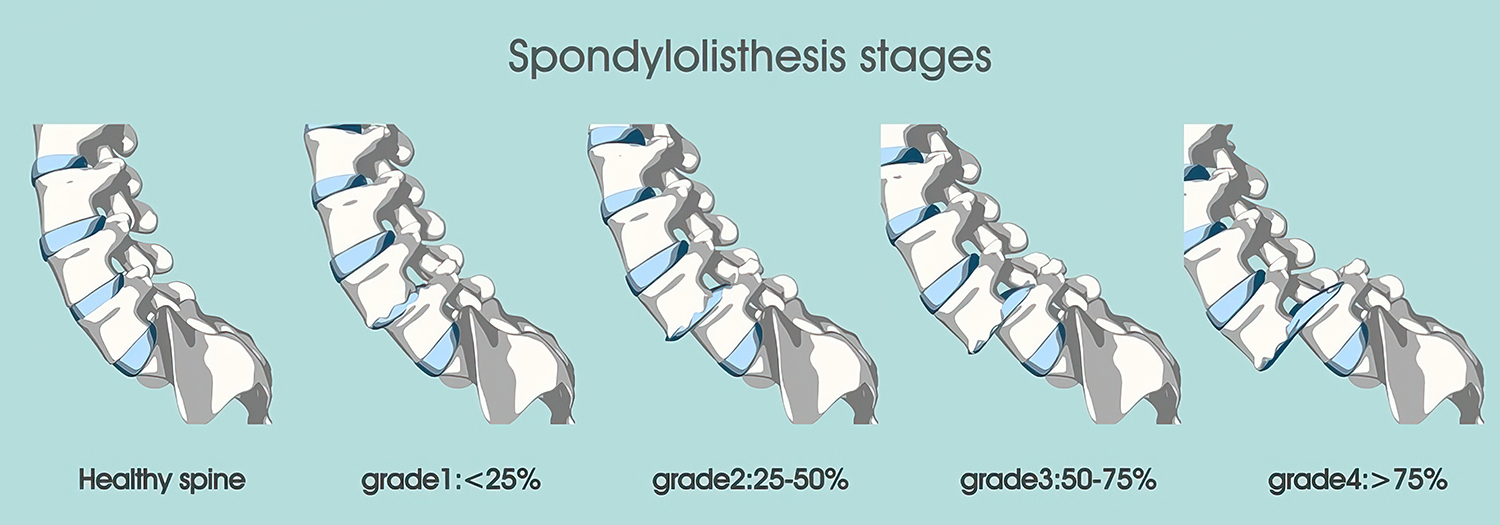
Slippage is graded by how far one vertebra has moved forward over the one below it, as a proportion of the vertebral body width. Grade one is up to a quarter, grade two up to a half, grade three up to three quarters, and grade four beyond that. The great majority of cases seen in practice are grade one or two, which is important because low-grade slips are usually managed without surgery.
Is spondylolisthesis serious?
Usually it is manageable. Most low-grade slips are stable, and many people have one without knowing. What changes the picture is instability, meaning the slip moves when you do, or nerve involvement producing leg pain, numbness or weakness. Those features shift the assessment and are the reason imaging in flexion and extension is sometimes requested.
What exercises should be avoided with spondylolisthesis?
Movements that arch the low back sharply tend to aggravate it, including deep back extensions, heavy overhead lifting and high-impact activity that repeatedly loads the spine in extension. Work that builds control of the trunk and hip muscles is usually better tolerated. Avoiding all activity is counterproductive, because the muscles that stabilize the segment are exactly what you need.
Can spondylolisthesis be treated without surgery?
In most low-grade cases, yes. Care centers on rehabilitation for the muscles that control the affected segment, activity modification, chiropractic care appropriate to the level involved, and injections where inflammation around a nerve root is driving leg symptoms. Surgery is reserved for progressive slippage, instability or neurological loss that has not responded to a proper course of conservative treatment.
Is spinal decompression safe if I have spondylolisthesis?
It depends entirely on whether the slip is stable. Unstable spondylolisthesis is a contraindication for DRX9000 spinal decompression, and would rule the treatment out. A stable low-grade slip may still be a candidate if a disc problem is the main pain source. This is not something to judge from a report alone, which is why Steven Cantor DC examines you and reviews your imaging before decompression is considered.