BULGING DISC
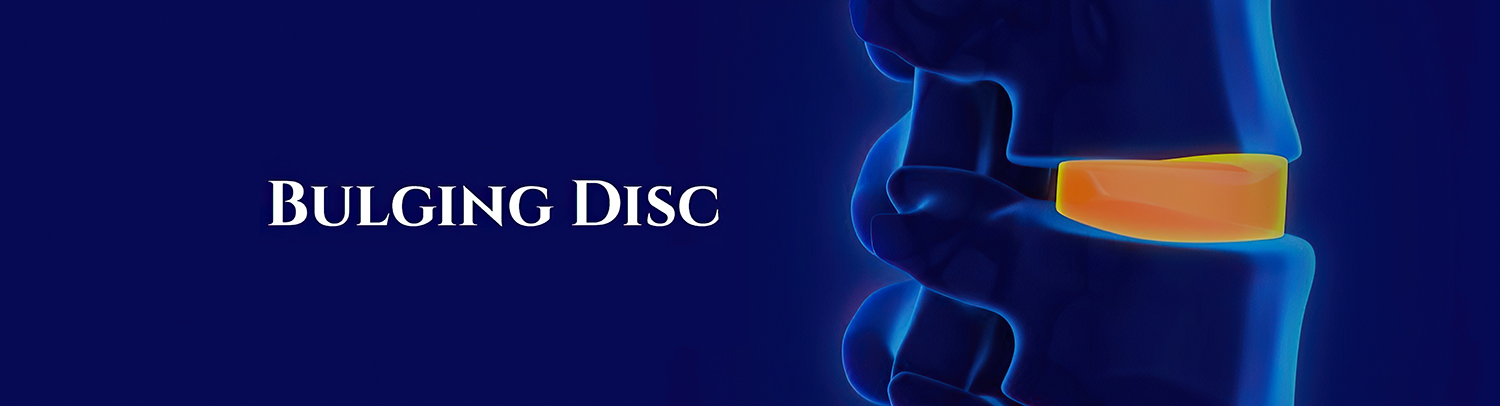
What is a Bulging Disc?
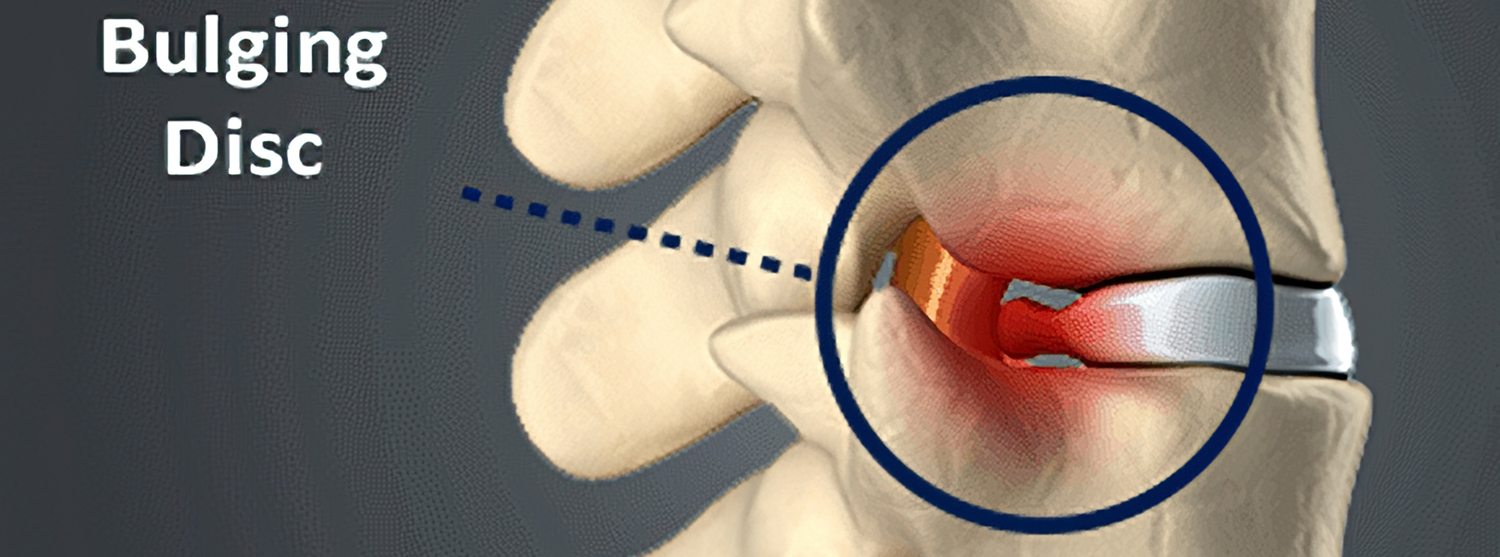
A bulging disc, also known as disc protrusion, is a very common occurrence. This condition happens when a disc shifts out of its normal position. Usually, this happens slowly and over a long period of time. As the disc moves, its inner, liquid-like nucleus begins to balloon toward the weakest point in its hard outer casing.
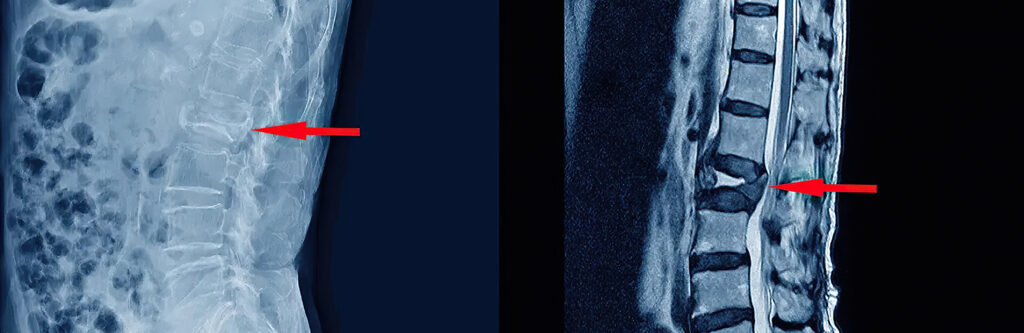
Usually, there is little or no pain associated with a bulging disc. But the affected disc may eventually suffer a herniation. Bulging discs may also place pressure on nearby nerves. This leads to serious discomfort and, in some cases, severe and chronic pain.
Bulging Disc Symptoms
- A bulging disc in the cervical are may cause pain or tingle in the neck, shoulders, arms, hands, or fingers. A bulging disc in the lumbar area may cause muscle spasms and lower back pain.
- Approximately 90% of all bulging discs occur in the lumbar spine.
- A thoracic bulging disc may cause pain in the upper back that radiates to the chest or stomach
Bulging Disc Causes
Bulging discs are caused mainly by the normal aging process and degenerative disc disease, with injury or trauma and sustained bad posture as the other common contributors.
- The normal aging process.
- Degenerative Disc Disease.
- Injury or trauma (herniated disc).
- Bad posture.
Treatment for a Bulging Disc
Treatment for a bulging disc starts conservatively, and most cases respond to a short period of relative rest, alternating ice and heat, over-the-counter anti-inflammatory medication, physical therapy, and a steroid injection around the involved nerve when swelling is limiting progress. Non-surgical spinal decompression is considered where the disc findings support it, and surgery is reserved for severe cases or for those that do not respond to conservative care:
Rest:
It’s a good idea to take some time and rest for a few days. However, it’s important to not have too much downtime. It’s important to keep moving so you don’t stiffen up your joints and muscles.
Ice/Heat:
You can also use ice and heat to help relieve pain. It’s best to alternate hot and cold. You can also determine what feels best to you.
Medications:
Over-the-counter medications are a good way to reduce inflammation and swelling. Medications such as Ibuprofen and Naxpron will do.
Physical Therapy
Exercise is a very important part of your recovery. A physical therapist can show you which exercises will help with your condition best. It’s important to strengthen the muscles that support your back. Which can also lead to pain relief.
Injections:
Your doctor may also recommend a steroid injection. This is placed around the spinal nerve to help bring down swelling. Which in turn will also help relieve pain.
Surgery
Last but not least, surgery may be recommended. If conservative methods do not help or if your case is severe enough, your doctor may recommend surgery. Talk with your doctor about the different surgical methods.
If you are experiencing a bulging disc, call TriMed Spine & Joint at 1-855-4-TRIMED. Our main office is in Boca Raton, and we serve patients across Palm Beach County and Broward County.
Non-Surgical Option: DRX9000 Spinal Decompression Therapy
For patients seeking non-surgical treatment of a bulging disc, DRX9000 spinal decompression therapy may be appropriate. The DRX9000 is FDA cleared to treat bulging discs. Call 1 (855) 487-4633 to schedule an evaluation with Steven Cantor DC.
Common Questions About Bulging Discs
These are the questions patients ask most often about how a bulging disc differs from a herniation, whether it settles on its own, when to be seen, and where non-surgical decompression fits at TriMed Spine & Joint in Boca Raton.
What is the difference between a bulging disc and a herniated disc?
A bulging disc happens when the inner nucleus balloons toward the weakest point of the disc’s outer casing while that casing stays intact, and a herniated disc happens when the casing ruptures and inner disc material escapes into the spinal canal. That distinction matters for treatment, because a bulge often causes little or no pain while a herniation more often presses directly on a nerve root.
Can a bulging disc heal on its own?
Many bulging discs settle with conservative care alone, since relative rest, alternating ice and heat, anti-inflammatory medication and physical therapy are often enough to quiet the symptoms without a procedure. A bulge that keeps returning or begins pressing on a nerve usually means the mechanics at that level have not changed, which is when non-surgical spinal decompression is considered.
When should I see a doctor about a bulging disc?
See a doctor when back or neck pain persists, when pain, tingling or numbness spreads into an arm, hand, leg or foot, or when muscle spasms keep returning, because those signs suggest the disc is pressing on a nerve. Loss of bladder or bowel control is a medical emergency and needs immediate care.
Is DRX9000 spinal decompression an option for a bulging disc?
DRX9000 spinal decompression is FDA cleared to treat bulging discs, and whether it fits your case is decided from your imaging and examination at TriMed Spine & Joint in Boca Raton. Published outcomes for non-surgical spinal decompression are collected in our DRX9000 clinical research summary, including a 2010 BMC Musculoskeletal Disorders study of 30 patients in which average disc height rose from 7.5 mm to 8.8 mm and average pain scores fell from 6.2 to 1.6.
Where do bulging discs most often occur?
Approximately 90% of all bulging discs occur in the lumbar spine, which is why lower back pain and muscle spasms are the most common presentation. A cervical bulge produces neck, shoulder, arm, hand or finger symptoms, and a thoracic bulge can produce upper back pain that radiates toward the chest or stomach.
Related Conditions and Treatment
A bulging disc sits on a spectrum with the other disc conditions, and the related TriMed pages cover herniated discs, degenerative disc disease and DRX9000 spinal decompression.
- Herniated Disc – the complete guide to herniated disc symptoms, causes and treatment.
- Degenerative Disc Disease – age-related drying and thinning of the spinal discs.
- DRX9000 Spinal Decompression – our non-surgical treatment for disc conditions.
Ready to Get Started?
Bulging disc treatment in Boca Raton starts with an evaluation that locates the bulge, checks whether it is pressing on a nerve, and determines whether conservative care or non-surgical spinal decompression is the right place to begin.