
HIP PAIN
What Causes Hip Pain?
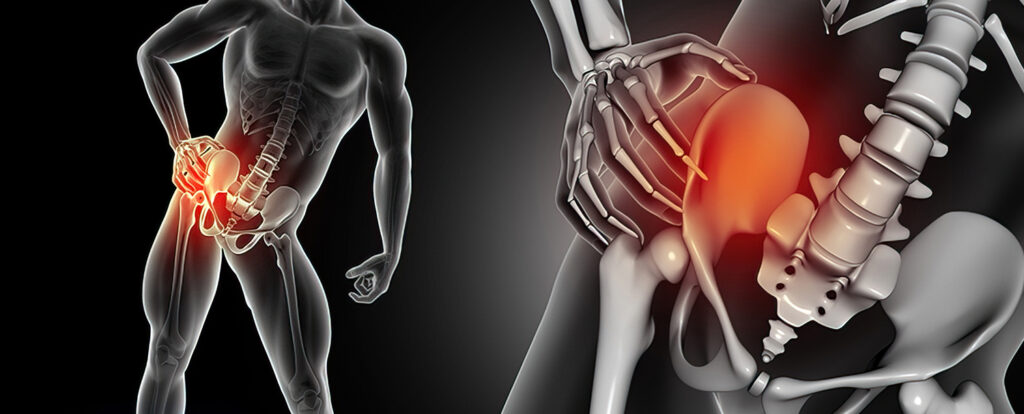
Hip pain involves any pain in or around the hip joint. In fact, you may not feel pain from your hip directly over the hip area. Instead, you might feel it in your groin or pain in your thigh or knee. However, hip pain may be caused by problems in the bones or cartilage of your hip, such as:
• Osteoarthritis
Osteoarthritis occurs after bone cartilage is worn away or damaged and hip bones no longer move smoothly. Osteoarthritis is common in those over 50. It causes pain in the groin area and the front side of the thighs. However, osteoarthritis is a chronic condition that causes pain and stiffness and is usually worse after activity. Due to friction, swelling, and stiffening, the hip joint may become deformed. In severe cases, however, a total hip replacement is required.
• Hip Fracture
Those suffering from osteoporosis, especially the elderly, fracture their hips often. In fact, a hip fracture is a common occurrence during simple daily activities. Surgery is required for a hip fracture.
• Muscle strains, tendonitis, or bursitis
Overusing the hip muscles can result in small tears. Although strains can happen in the lower back after quick turning, twisting, or pulling. Tendons are the tissues that connect muscles to hip bones and joints. Inflammation of the tendons occurs from frequent strenuous activity. Bursae are fluid-filled sacs that cushion the bones, tendons, and muscles near the joints. And bursitis is the painful inflammation of these sacs.
• Inflammatory Conditions
There are many inflammatory conditions, such as rheumatoid arthritis or polymyalgia rheumatica. Early diagnosis of inflammatory diseases is vital. Considering some conditions are treatable and can prevent more severe complications.
• Infection or malignancy
Acute infections need urgent diagnosis and care. Considering, they can cause joint destruction. In fact, they can cause an overabundance of harmful bacteria and toxins if left untreated.
Common Questions About Hip Pain
Where is hip arthritis pain usually felt?
Most often in the groin or the front of the hip, as a deep ache that is worse when you put weight through the leg and stiffest after sitting still or first thing in the morning. It can refer down towards the knee. Pain felt mainly on the outside of the hip, over the bony point, is more often bursitis or tendon irritation than arthritis of the joint itself.
Can back problems cause hip pain?
Frequently, and it is one of the more common reasons hip pain gets treated in the wrong place. Nerve roots in the lower back refer pain into the buttock, groin and thigh, so a disc problem can present as hip pain with an entirely normal hip joint. Clues include pain that changes with spinal position, pain travelling below the knee, and pins and needles or numbness. See our pages on lower back pain and sciatica.
When is hip pain an emergency?
Go to an emergency department if you cannot bear weight after a fall, particularly if you are older or have osteoporosis, since a hip fracture can occur with a relatively minor fall. Fever with hip pain, or a hip that has suddenly become extremely painful to move in any direction, also needs same-day assessment.
How is the cause of hip pain diagnosed?
By examination first. Where the pain sits, which movements reproduce it, and whether the pain follows movement of the hip joint or of the spine narrows the possibilities considerably. Imaging is then used to confirm what the examination suggests. This order matters, because imaging of an older hip often shows some degenerative change whether or not it is the source of the pain.
What are the treatment options for hip pain?
Conservative care first for most causes: loading the joint appropriately, rehabilitation for the hip and trunk muscles, and treatment directed at the spine when the pain is referred. Where inflammation is the limiting factor, image-guided injection can help. Where the joint surface itself is the problem and conservative care has been exhausted, our orthopedic extremities team can advise on surgical options.