THE SPINE
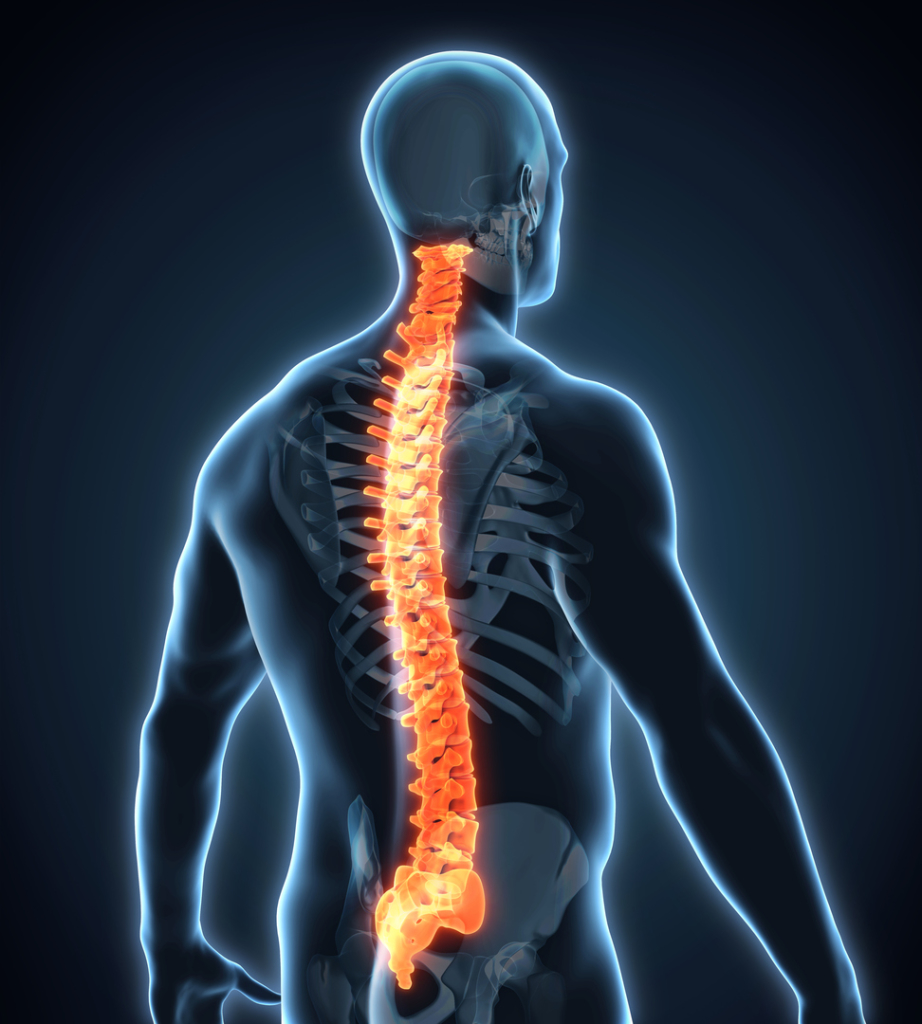
Understanding the spine is the key to understanding what chiropractic doctors do. It also explains why they obtain extraordinary results with a variety of different conditions.
The spine is a complex structure. It contains a number of associated muscles, ligaments, joints, and nerves that commonly become irritated and injured.
Extended sitting, repetitive motions and bad postural habits all take a toll. So do mental stress, lack of exercise and inadequate nutritional intake. These everyday stresses accumulate and produce devastating effects on the spinal components.
Doctors of chiropractic are the healthcare leaders in providing safe, fast, and effective relief for most spinal problems.
THE SPINAL COLUMN
The spinal or vertebral column is a collection of 24 vertebrae plus the sacral bone. These bones provide support and mobility for the torso while also protecting the nervous system.
Read the full guide: What Do You Know About Your Spinal Column?
THE SPINAL VERTEBRAE
The vertebrae are the small bones of which the spinal column is comprised of. These individual functioning units are the basis of motion in the torso. They connect to and glide on each other by way of a spinal disc and 2 facet joints. Spinal muscles and ligaments attach to each vertebra to permit movement.
Located in the rear of each vertebra is a hollowed-out portion called the spinal canal. It encases the spinal cord as it descends from the brain, much like beads on a string. At each vertebral level, spinal “nerve roots” peel away from the spinal cord. Small openings are formed by adjacent vertebrae. They provide a pathway for these delicate nerve roots to exit to the rest of the body. These openings are referred to as intervertebral foramen or IVF and are a common location for nerve irritation.
When a vertebra becomes misaligned or fixated in relation to neighboring vertebrae, chiropractors call it a vertebral subluxation. These subluxations can cause pain, reduced range of motion and muscle spasms. They may also produce nerve irritation and interference. This happens either by mechanical pressure or inflammatory biochemicals.
Doctors of chiropractic are specifically trained to detect and treat these problems. They address subtle vertebral abnormalities that occur in the spine.
THE INTERVERTEBRAL DISCS
The intervertebral discs are a prevalent source of lower back pain. They are one of the most frequently injured spinal structures. The discs connect adjacent spinal vertebrae together and provide a degree of shock absorption in the torso.
Read the full guide: Have You Suffered From a Disc Injury?
THE FACET JOINTS
Many spinal experts actually consider the facet joints to be the most common source of spinal pain and discomfort.
Each vertebra possesses 2 sets of facet joints. One set articulates to the vertebrae above. The other set articulates to the vertebrae below. In association with the spinal discs, the facet joints allow for movement between the individual vertebrae of the spine.
The facet joints are under a constant load from the weight of the body. They also guide general motion and prevent extreme motions in the trunk. Repetitive or excessive trunkal motions, especially in rotation or extension, can irritate and injure facet joints or their encasing fibers. Abnormal spinal biomechanics work like a wheel out of alignment. Together with bad postural habits, they can significantly increase spinal stresses. That greatly accelerates the wear and tear on the facet joints.
Chiropractic doctors identify and treat facet joint abnormalities and stresses, along with other spinal abnormalities. The goal is to keep backs and bodies healthy and free from pain.
THE SPINAL MUSCLES AND LIGAMENTS
Spinal muscles and ligaments attach to the vertebrae, ribs, and pelvis. They permit and manage various trunkal motions. These include forward and backward bending, side-to-side bending, and rotation or twisting. Sometimes a spinal motion occurs in excess or a muscle is worked beyond its capacity. Injury then occurs, whether suddenly or gradually over time.
Sprains and strains of the muscles or ligaments upset the normal balance of the spine. Spinal structural alignment and biomechanics can be significantly altered. These alterations make the spinal components (discs, facets, vertebrae, nerves, etc.) increasingly prone to injury and degenerative processes.
Doctors of chiropractic rehabilitate spinal muscles and ligaments to prevent spinal imbalances. Proper spinal alignment and spinal biomechanics can only occur with healthy muscles and ligaments.
THE SACROILIAC JOINT
The sacroiliac joint is another spinal component that undergoes very large spinal stresses. The ligaments supporting the joints can be a source of low back pain. So can the actual joint surfaces. Both can even refer pain into the lower extremities.
There are 2 sacroiliac joints formed by the articulation between the sacrum and 2 ilium bones of the pelvis. The sacroiliac joints can be injured much like other spinal structures. Causes include acute trauma, repetitive movements, and poor posture, to name a few.
Symptoms include lower back pain with the pain occasionally extending down the back of the leg. Hip pain, knee pain, and foot and ankle pain may also be present. These come from increased stress in those joints. The stress results from an alteration of pelvic biomechanics.
Sacroiliac problems are extremely common in pregnancy. During this time, the pelvis experiences many physical stresses due to weight and hormonal factors. Chiropractic care throughout pregnancy is essential in minimizing pelvic and spinal stresses. A study was published in the journal Obstetrics and Gynecology. It found 7 out of 10 women obtained sacroiliac pain relief from chiropractic spinal manipulation.
A simple but surprisingly effective way to identify pelvic misalignments is to check for uneven leg lengths. Lie on a flat surface. Then have a friend or family member compare the bottom of both heels for symmetrical length. If there is any discrepancy between leg lengths you may have a pelvic or lower back misalignment.
Chiropractic adjustments are frequently applied to the ilium and sacrum to successfully normalize and restore sacroiliac joint position and biomechanics.
THE NERVOUS SYSTEM
The nervous system is the master controller of all cells, tissues, and organs. Nerves control the heart, lungs, immune system, and endocrine system, as well as our thoughts and other cognitive processes. Effectively, the nervous system directs and oversees all bodily functions. It keeps us alive and healthy and fights off diseases and infections. It also heals us after we have sustained injury.
Many people are surprised to learn that the spine plays a key role in protecting the nervous system. The spinal column provides movement for the torso. Its main function, though, is to encase and protect the spinal cord and nerve roots. Without this protection, it’s unlikely that we would survive a relatively small slip and fall injury.
How Nerve Roots Exit the Spine
The spinal cord descends from the brain. At each vertebral level, spinal nerve roots peel away from it. They exit through openings made by adjacent vertebrae. These small protective pathways are called intervertebral foramen, or IVFs. They permit the safe exit of the delicate nerve roots to the rest of the body. The location of the IVF leaves the nerve roots exposed. Herniated or bulging spinal discs, subluxated vertebrae and arthritic bony growths commonly irritate or impinge upon them. So do inflammatory biochemicals from nearby injured tissues.
What Happens When a Nerve Is Irritated
When there is irritation and interference to a nerve, messages or impulses traveling along that nerve can get scrambled. Some signals become only slightly altered while others may completely fail to reach their destination. This process continues over time. Cells, tissues and organs depend on the affected nerves for communication. They become less effective at their many important tasks and less able to maintain optimal health. Ultimately, the affected tissues can deteriorate, degenerate, and become nonfunctional and diseased.
This model of disease helps explain something many patients notice. Those under chiropractic care have noted dramatic improvements with seemingly “non-spinal” conditions. Examples include dizziness, ulcers, ear infections, asthma, menstrual pains, and low energy levels. While it’s not prudent to claim chiropractic treatments may eliminate or treat such conditions, many patients have experienced significant relief.
Chiropractors are specifically trained to detect and treat vertebral misalignments and fixations. They also address many other common spinal abnormalities that cause nerve irritation and interference. Correcting nerve irritation and interference allows the body to function the way it was meant to.
Ready to Get Started?
Common Questions About the Spine
How many bones are in the spine?
There are 33 vertebrae in total, 24 of which move freely. The remaining bones are fused into the sacrum and the coccyx at the base.
What do cervical, thoracic and lumbar mean?
They are the three moving regions of the spine. Cervical is the neck, thoracic is the mid back where the ribs attach, and lumbar is the low back, which carries the most load.
What do the discs actually do?
Each disc is a cushion between two vertebrae, with a soft gel centre and a tough layered outer wall. It absorbs shock and allows the spine to bend and twist, and it is the structure involved in a herniated disc or a bulging disc.
Why do most disc problems happen in the neck and low back?
Those are the two regions that move the most and carry load through the greatest range, while the thoracic spine is braced by the rib cage. More motion under more load means more wear over time.
Does wear and tear on my spine mean I will need surgery?
No. Degenerative changes are extremely common with age and are often present in people with no pain at all, and most spine problems are managed without surgery.