SCOLIOSIS
What is Scoliosis?
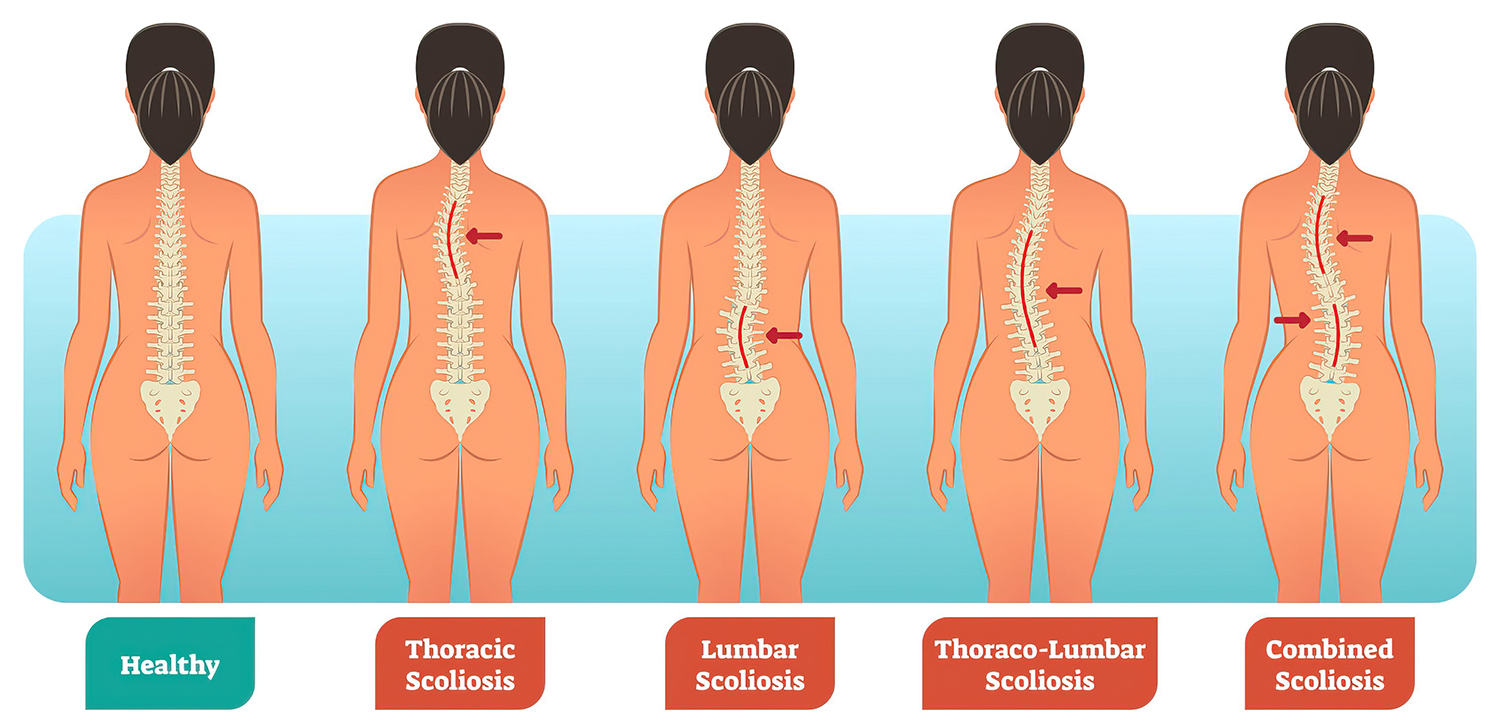
Scoliosis is the most common abnormal curvature of the spine. It is most common in adolescent females.
Scoliosis is a genetic condition that frequently runs in families. Small curves usually cause no pain.
The curve is commonly in the upper back. The patient may have one hip higher than the other, and frequently one shoulder blade appears more prominent than the other.
Scoliosis Symptoms & Signs
- One hip may be higher than the other
- One shoulder blade appears more prominent
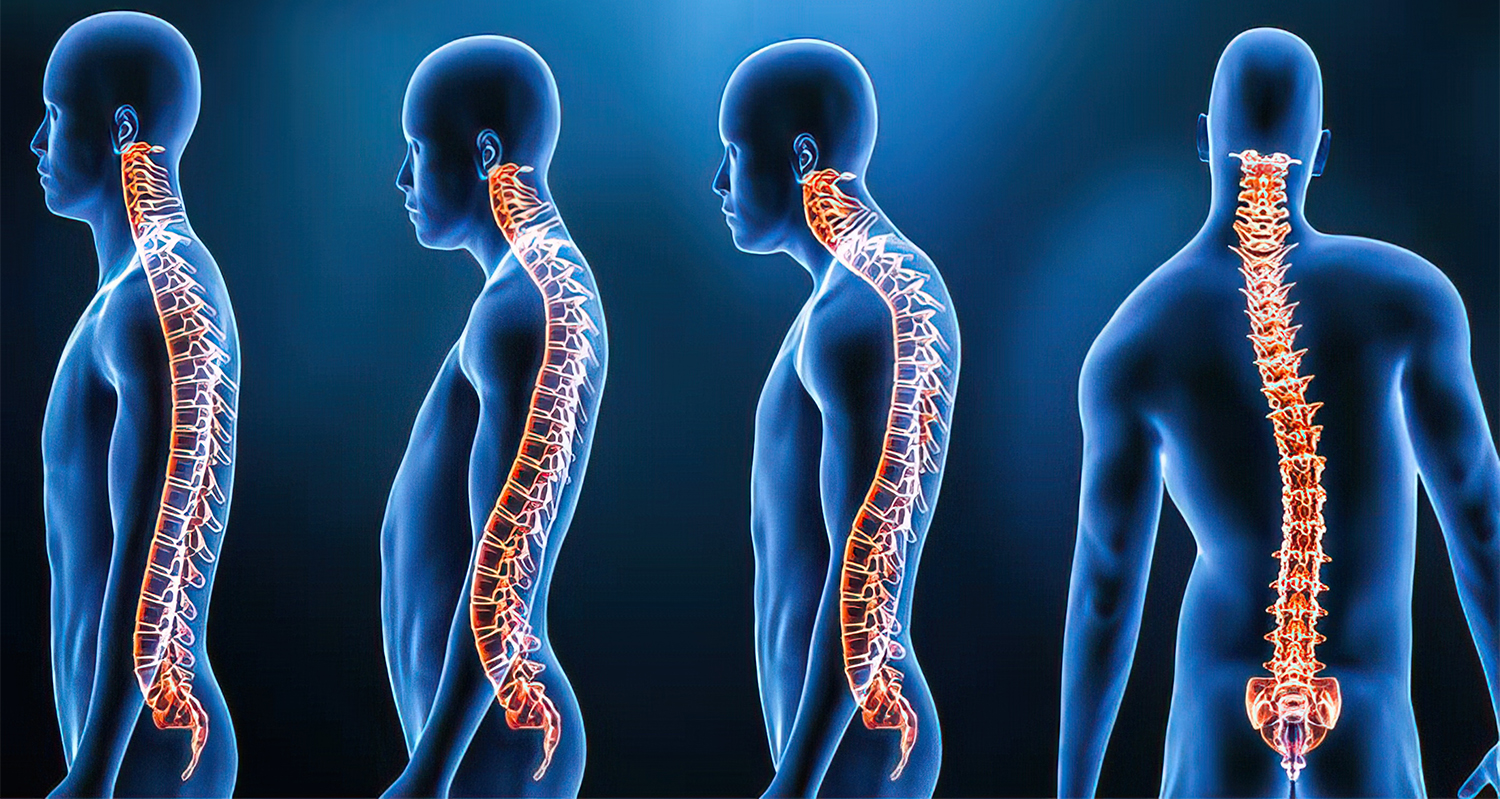
- Small curves in the back; usually upper back
- Deformity in back
- Cork screwing effect from rotation
Scoliosis Causes
- There is no known cause for Scoliosis
- Scoliosis tends to run in families
Common Questions About Scoliosis
How is scoliosis diagnosed?
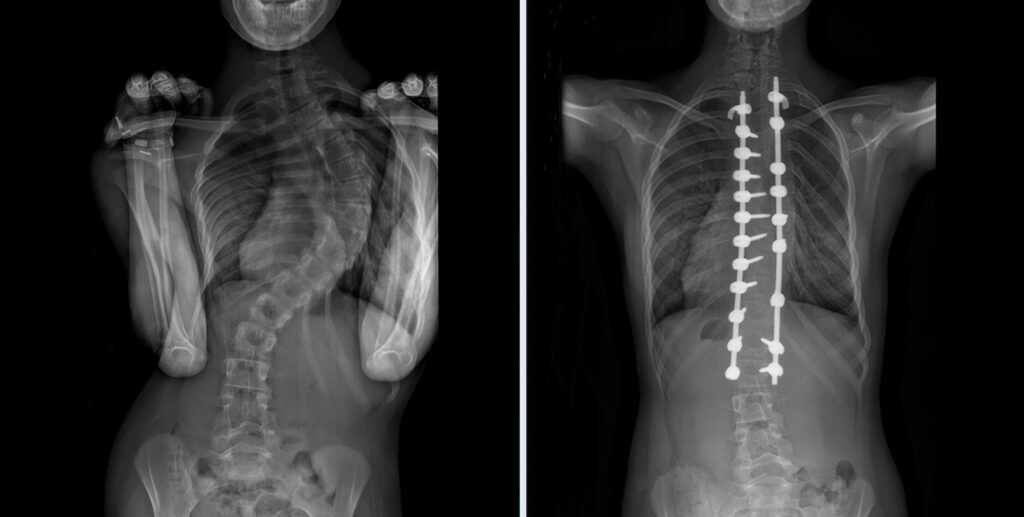
Examination first: a doctor looks for one shoulder or hip sitting higher than the other, a prominent shoulder blade, and a rib hump that becomes obvious when you bend forward. A standing full-spine x-ray then confirms it, and the curve is measured in degrees. A sideways curve of more than ten degrees is what defines scoliosis; anything less is considered spinal asymmetry.
Does scoliosis always cause back pain?
No. Small curves are frequently painless and are often found incidentally. Pain is more common in adults, where the curve is combined with degenerative change in the discs and facet joints, and in larger curves where muscles are working unevenly to keep you upright. When an adolescent with scoliosis has significant pain, that warrants investigation rather than being assumed to be the curve itself.
Can chiropractic care help scoliosis?
It cannot straighten a structural curve, and any practitioner who tells you otherwise is overpromising. What conservative care can address is the pain, stiffness and muscle imbalance that often accompany a curve, and it can improve how well you move and tolerate activity. Steven Cantor DC examines you, and where a curve is significant or progressing he will refer you to our orthopedic spine specialist.
Does scoliosis get worse over time?
Curves are most likely to progress during the adolescent growth spurt, which is why monitoring at that age matters. In adults, curves can progress slowly as the discs and joints degenerate, and a curve that was stable for decades may start to change. Progression is tracked by repeat measurement over time, not by symptoms.
When does scoliosis need surgery?
Surgery is generally considered for large or rapidly progressing curves, or where the curve is producing nerve compression or affecting how you function day to day. Most people with scoliosis never need it. That assessment belongs with an orthopedic spine surgeon, and our team includes one, so the opinion can be arranged without starting again elsewhere.