SPINAL STENOSIS
What is Spinal Stenosis?
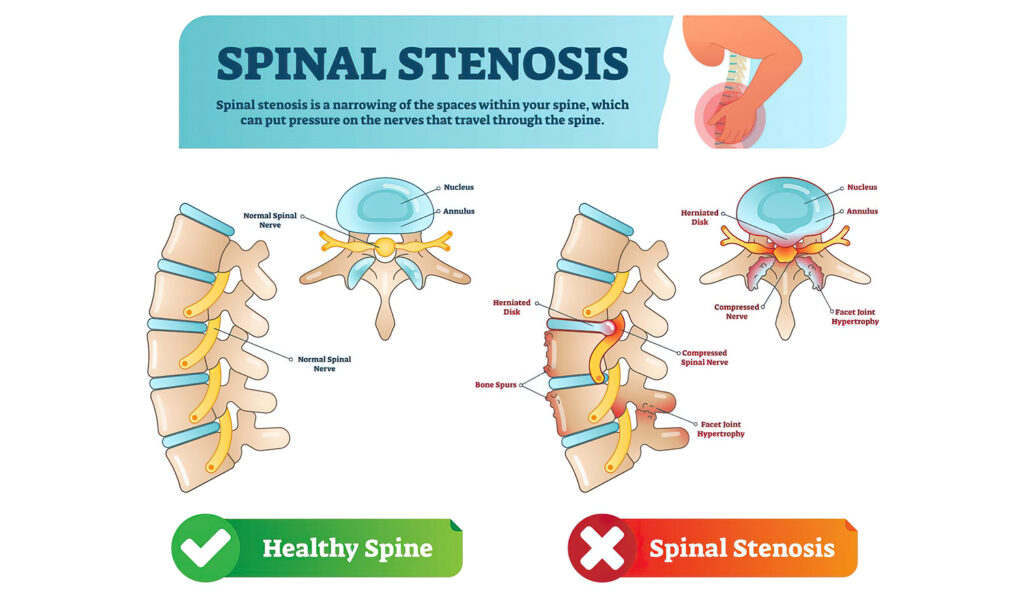
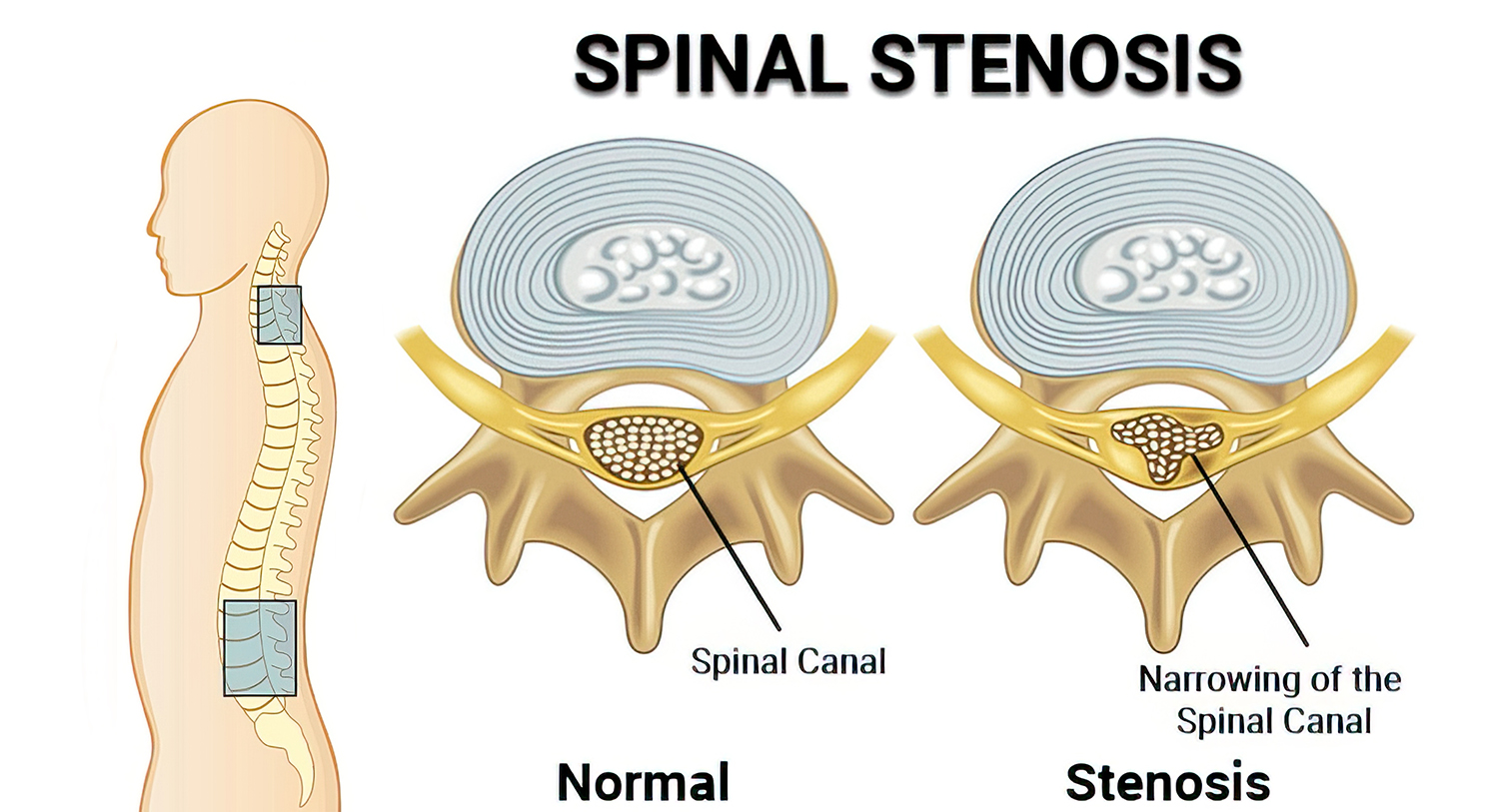
Stenosis is a narrowing of the spinal canal. When this occurs it will often pressure the nerves that travel through the spine. Spinal stenosis can develop in any area of the spine. However, it will most often occur in the neck.
There are two types of spinal stenosis. They are classified by where the condition occurs. Although not common, it is also possible to have more than one type. The two main types are:
- Cervical Stenosis. This condition occurs at the narrowing part of the spine, in your neck.
- Lumbar Stenosis. In this condition, there is also narrowing, however, it occurs in the lower back.
Degenerative changes in the spine are the most common cause. In fact, the degenerative changes that occur are due to osteoarthritis. Stenosis symptoms can often be managed effectively through conservative methods like DRX9000® spinal decompression. However, surgery may be recommended also in severe cases.
Stenosis Symptoms
Spinal stenosis symptoms follow the level of the narrowing: cervical stenosis produces neck, hand and balance symptoms, while lumbar stenosis produces heaviness, cramping and weakness in the buttocks and legs that comes on with walking or standing.
Stenosis Causes
Degenerative change is the most common cause of spinal stenosis, with osteoarthritic bone overgrowth, thickened ligaments and herniated discs gradually crowding the canal. A small number of patients are born with a narrow canal instead.
Cervical Stenosis
Cervical stenosis compresses the spinal cord and nerve roots in the neck, so symptoms show up in the neck, hands and arms and in how steadily you walk.
- Stiffness in neck
- Weakness in arms causing difficulty using the hands
- Pain and Numbness in hands and/or arms
- Improper balance
- Neck pain
Lumbar Stenosis
Lumbar stenosis narrows the canal in the lower back, so the hallmark pattern is limited walking tolerance — heaviness, cramping or weakness that builds after a few minutes on your feet and eases within minutes of sitting or leaning forward.
- Tired, heavy feeling in back, buttocks, and legs while walking or standing
- Cramping sensation in these areas
- Weakness, numbness, or pain in the legs
Some are born with a small spinal canal. However, most stenosis happens when something occurs in the narrow space within the spine. There are many causes of the condition, such as:
- Bone overgrowth
- Herniated Discs
- Tumors
- Ligaments that have become thickened
- Spinal injuries
Lumbar Spinal Stenosis
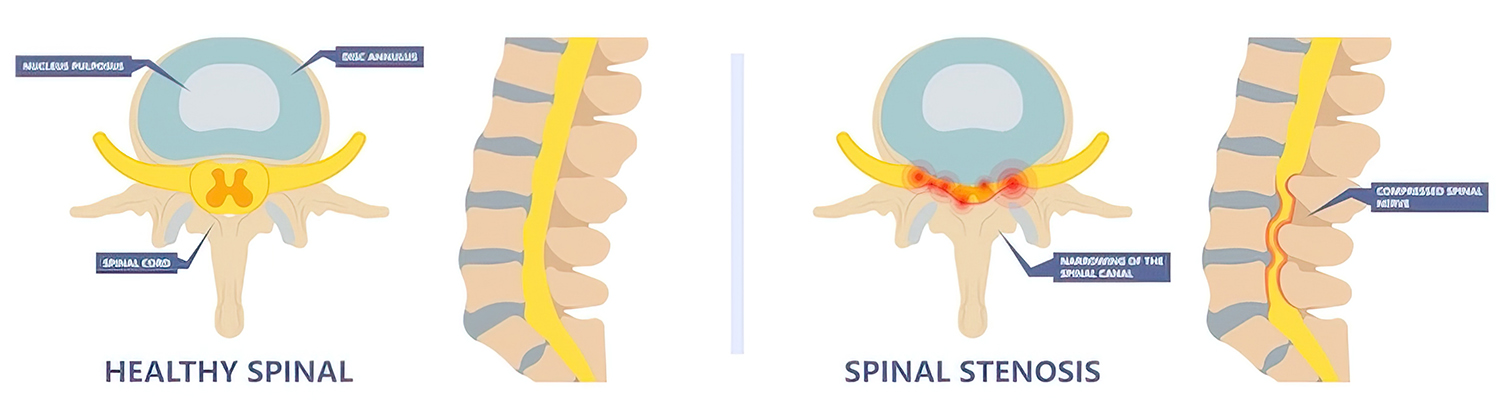
Lumbar stenosis is narrowing in the lower back — the five vertebrae that sit between your ribs and your pelvis. Aging, injury or an underlying medical condition gradually tightens the canal and compresses the nerves that leave the lumbar spine and travel down into the legs. That is why the symptoms described above are so often felt in the buttocks, thighs and calves rather than in the back itself.
Along with the heaviness, cramping and numbness listed earlier, patients frequently report pain radiating through the thighs and legs, difficulty standing or sitting for long stretches, and enough ongoing discomfort to limit work and activity. In a small number of cases, weakness in the lumbar spine can affect bladder or bowel control. That is an urgent symptom and should be evaluated right away.
How lumbar spinal stenosis is diagnosed
Lumbar spinal stenosis is diagnosed from a physical and neurological examination of the low back that checks walking tolerance, reflexes, leg strength and whether leaning forward relieves the symptoms, then confirmed with imaging that shows the narrowed canal. Steven Cantor DC and the team at TriMed Spine & Joint in Boca Raton go through your symptoms and medical history, examine the low back and spinal column, and order the imaging your case calls for:
- X-rays
- MRI
- CT scan
Occasionally a myelogram is ordered as well. A contrast dye is injected into the spine to highlight the spinal cord and nerve roots, which makes the exact levels of compression easier to see.
Treatment options for lumbar spinal stenosis
Care starts conservatively. Over-the-counter pain relievers and anti-inflammatories keep you comfortable while physical therapy reduces nerve irritation and strengthens the muscles that support the spine. An epidural injection, which delivers anesthetic medication directly into the spine, can help when chronic pain is holding back your progress.
If the narrowing is severe and symptoms are eroding your quality of life, surgery becomes a reasonable discussion. Several procedures exist — a lumbar laminectomy is the most common — and all of them are designed to take pressure off the nerves and provide lasting relief.
Cervical Stenosis
Cervical stenosis is the same narrowing, higher up, and it is estimated to affect about 5% of adults. An opening at the center of every vertebra forms a continuous channel once the bones are stacked, and your spinal cord runs through that channel, surrounded and protected by bone. When the channel tightens, the space around the cord and the nerve roots disappears and pressure builds.
What causes cervical stenosis
A congenital narrow canal accounts for a small number of cases. Far more often the cause is degenerative change that accumulates over the years, including:
- Herniated disc
- Bone spurs due to osteoarthritis
- Enlarged ligaments
- Degenerative disc disease
A neck injury or a vertebral fracture can also bring it on.
Symptoms specific to the neck
Cervical stenosis produces neck stiffness, weakness and clumsiness in the hands, numbness in the fingers and changes in balance, and it commonly adds pain radiating down one or both arms, numbness or tingling in the arms, and muscle weakness on one or both sides. Some patients describe an electric-shock sensation running down the back when they move their head. That one is worth reporting, because it points to irritation of the spinal cord itself.
How cervical stenosis is treated
Nonsurgical care comes first: medication to control the pain, passive and active physical therapy, and spinal injections to interrupt the nerve signals driving your symptoms.
When conservative treatment does not relieve the pain, the doctors at TriMed Spine & Joint are experienced with several minimally invasive procedures that treat cervical stenosis effectively:
- Anterior cervical discectomy and fusion — the herniated disc is removed and the level is fused for stability
- Cervical laminectomy — partial or complete removal of the back of a vertebra to decompress the spinal cord
- Foraminotomy — the openings where the nerves leave the spine are enlarged
- Cervical arthroplasty — the damaged disc is removed and replaced with an artificial disc
If your neck pain is ongoing or getting worse, call TriMed Spine & Joint or book an appointment online.
Are You a Candidate for DRX9000 Spinal Decompression?
Spinal stenosis by itself is not an indication for non-surgical spinal decompression. However, many patients diagnosed with stenosis also have a herniated disc, a bulging disc, or degenerative disc disease – conditions the DRX9000 is FDA-cleared to treat. Steven Cantor DC reviews your MRI or X-ray to determine whether DRX9000 spinal decompression therapy is appropriate for your case. Call 1 (855) 487-4633 to schedule an evaluation. Published outcomes for non-surgical spinal decompression are collected in our DRX9000 clinical research summary, and patients travel to TriMed Spine & Joint in Boca Raton from across Palm Beach County for that evaluation.
Common Questions About Spinal Stenosis
These are the questions patients ask most often about spinal stenosis symptoms, how quickly it progresses, what can be done without surgery, and when decompression applies, answered by the team at TriMed Spine & Joint in Boca Raton.
What are the early signs of spinal stenosis?
In the lower back, the classic early sign is leg pain, heaviness or cramping that comes on with walking or standing and eases within a few minutes of sitting or leaning forward over a counter or shopping cart. In the neck, early signs are more often clumsiness of the hands, numbness in the fingers or a change in balance. Back or neck pain may be surprisingly mild in both cases.
Does spinal stenosis get worse over time?
The narrowing itself is usually a gradual, age-related process and tends to progress slowly. Symptoms, however, do not follow a straight line, and many people have long stable periods. Progression is monitored by what you can do, particularly how far you can walk before symptoms start, rather than by the appearance of a single scan.
Can spinal stenosis be treated without surgery?
In many cases, yes. Conservative care focuses on improving tolerance for activity through targeted rehabilitation, positional strategies, chiropractic care and, where indicated, image-guided injections to reduce inflammation around the compressed nerves. Surgery is generally reserved for stenosis with progressive neurological loss or disability that has not responded to a proper course of conservative treatment.
What should I avoid if I have spinal stenosis?
Sustained extension of the spine, for example prolonged standing, walking downhill or overhead work, tends to narrow the canal further and provoke symptoms. Slightly flexed positions usually relieve them. Rather than avoiding activity altogether, which weakens the muscles that support the spine, it is better to build tolerance in positions your spine handles well.
Is DRX9000 spinal decompression appropriate for spinal stenosis?
Sometimes, and it depends on the cause of the narrowing. The DRX9000 is FDA cleared for herniated discs, bulging discs, degenerative disc disease and posterior facet syndrome, so it may be considered when a disc bulge or a collapsed disc space is contributing to the narrowing. Stenosis caused mainly by bony overgrowth, or accompanied by instability, is a different problem and may not be suitable. That decision is made in person by Steven Cantor DC.
Related Conditions and Treatment
Spinal stenosis frequently occurs alongside disc conditions, and the related TriMed pages cover herniated discs, degenerative disc disease and DRX9000 spinal decompression.
- Herniated Disc – the complete guide to herniated disc symptoms, causes and treatment.
- Degenerative Disc Disease – age-related drying and thinning of the spinal discs.
- DRX9000 Spinal Decompression – our non-surgical treatment for disc conditions.
Ready to Get Started?
Spinal stenosis treatment in Boca Raton starts with an evaluation that identifies where the canal is narrowed and whether a disc is contributing, which is what determines whether conservative care, non-surgical spinal decompression, an interventional pain management procedure or a surgical consult is the right place to begin.