Shockwave Therapy
–Extracorporeal Shockwave Therapy–
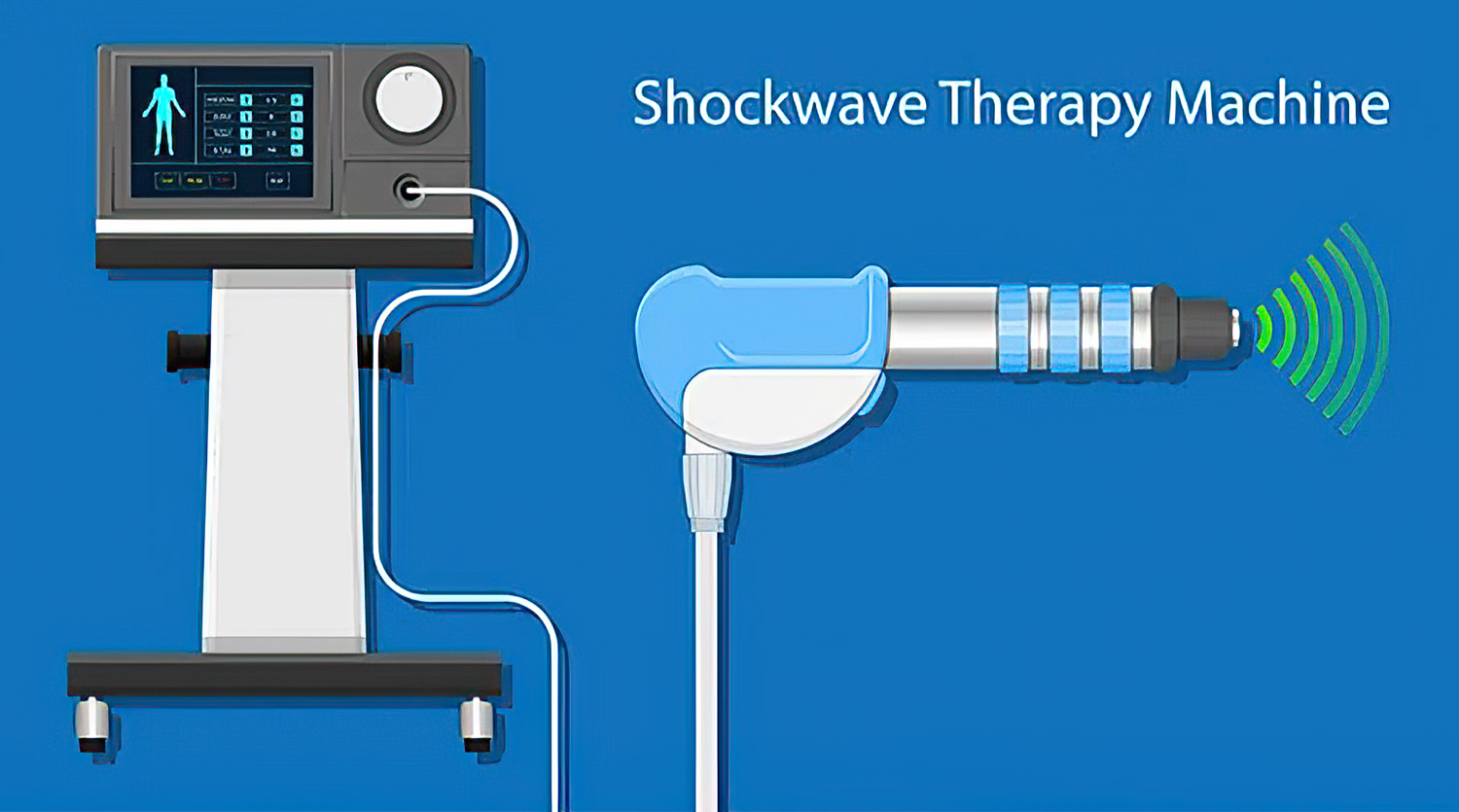
Extracorporeal shockwave therapy (ESWT) is a non-invasive, out-patient alternative to surgery for those with many joint and tendon disorders. ESWT sends acoustic shock waves into bone or soft tissue. In effect, this reinjures the area on a cellular level. It also breaks up the scarring that has penetrated tendons and ligaments. The controlled reinjuring of tissue allows the body to regenerate blood vessels and bone cells. The resulting revascularization leads to faster healing and often a return to pre-injury activity levels. ESWT is mostly used for kidney stones removal, in physical therapy and orthopedics.
Extracorporeal shockwave therapy is used as a second line measure. Conditions treated include tennis elbow, shoulder rotator cuff pain, and achilles tendinitis. It is also used for plantar fasciitis and greater trochanteric pain syndrome.
ESWT is also used to promote bone healing and treat bone necrosis. It is an effective alternative to surgical treatment of non-healing fractures.
ESWT is also used for wound healing. It has shown positive short-term and long-term results in diabetic patients with foot ulcers. Evidence is still lacking for ESWT in healing venous leg ulcers. Randomised controlled trials in this area are needed.
Common Questions About Shockwave Therapy
What is shockwave therapy used for?
It is used mainly for persistent tendon and soft tissue problems. These are problems that have not settled with rest and rehabilitation. Examples include plantar fasciitis and heel pain, Achilles tendon problems, tennis and golfer’s elbow, and painful shoulder tendons. It is generally considered when a condition has become chronic rather than as a first response to a new injury.
Does shockwave therapy hurt?
It is usually described as an intense tapping or pulsing sensation. This can be uncomfortable while the head is over the most tender point. The intensity is adjustable and is built up to what you can tolerate. Tell the clinician if it is too much. Some soreness in the area for a day or two afterward is common and expected.
How many shockwave treatments will I need?
Shockwave is delivered as a short course, typically several sessions about a week apart. The response is reviewed as you go. It is not a single-visit treatment. It works best combined with a loading program for the affected tendon rather than on its own.
How soon does shockwave therapy work?
Improvement is usually gradual over several weeks rather than immediate. It is common for the area to feel slightly worse for a day or two after each session. The soreness then settles. Sometimes there is no change at all by the end of a course. That is a reason to reconsider the diagnosis.
Who should not have shockwave therapy?
It is avoided in pregnancy and over an open growth plate in children and adolescents. It is also avoided over an area of infection or a known or suspected tumor. It is also generally avoided in people with a clotting disorder or on anticoagulant medication. It is avoided near large nerves and blood vessels too. Tell the clinician about your medication and medical history before treatment.