Spinal decompression therapy is a non-surgical treatment designed to relieve pressure on spinal nerves from compressed discs in the spine. At TriMed Spine & Joint, Steven Cantor DC uses the DRX9000, a specialized spinal decompression system. It creates controlled, gentle traction on the spine. This reduces pressure within the disc space. That can help increase disc height, and in many cases reduce the size of the herniation itself. As the disc rehydrates and regains height, nerve irritation often decreases. Circulation of nutrients and fluids to the area also improves.
Patients who benefit most from DRX9000 treatment often include those with:
- Chronic back pain or neck pain
- Radiating arm or leg pain caused by nerve compression
- Diagnosed herniated or bulging discs that have not responded to rest, medication, or physical therapy alone
DRX9000 spinal decompression therapy is non-invasive. Patients often consider it when they hope to avoid surgery or long-term reliance on pain medication.
If you are comparing clinics, this guide explains what to look for when choosing spinal decompression in Boca Raton, including the questions worth asking before you start care.
Real Results From Real Patients
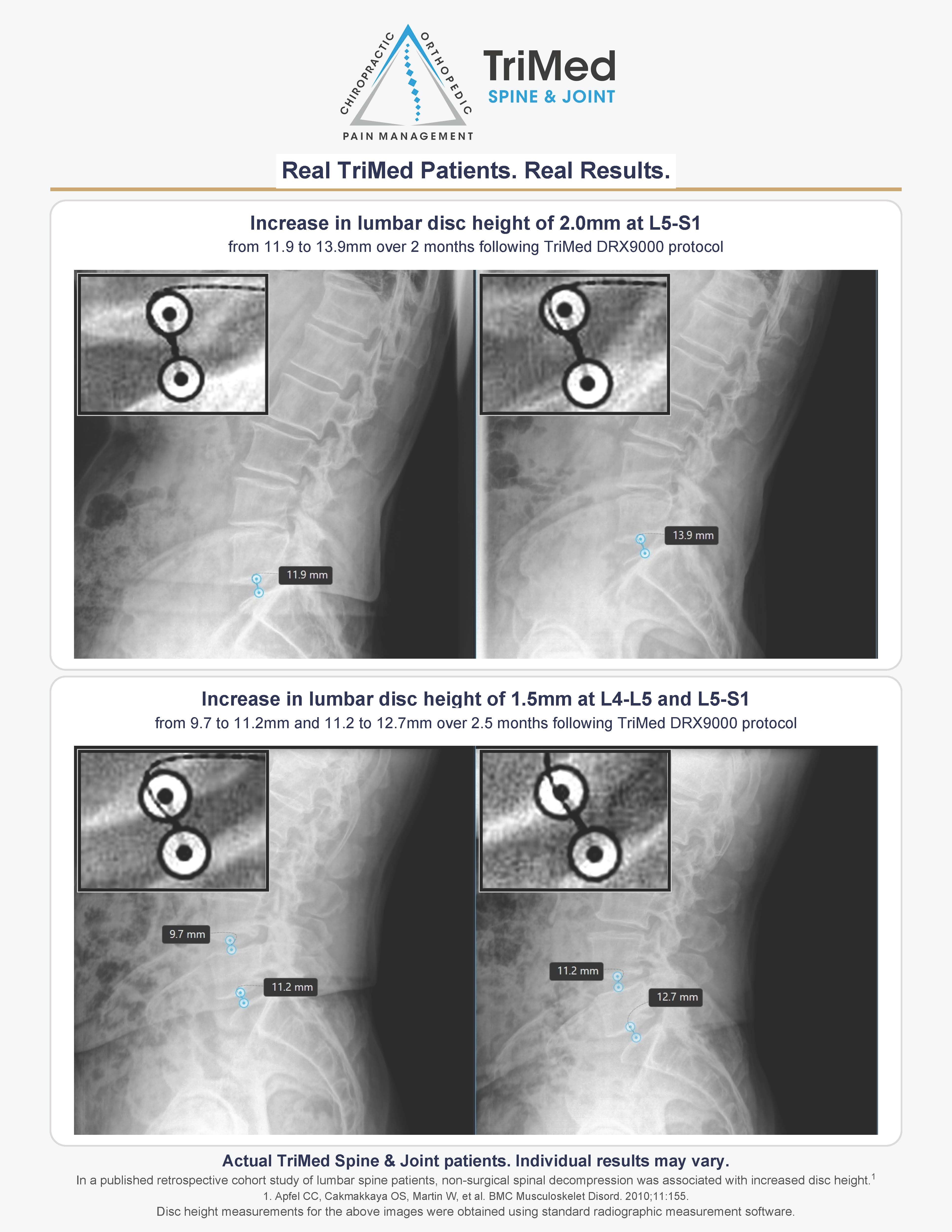
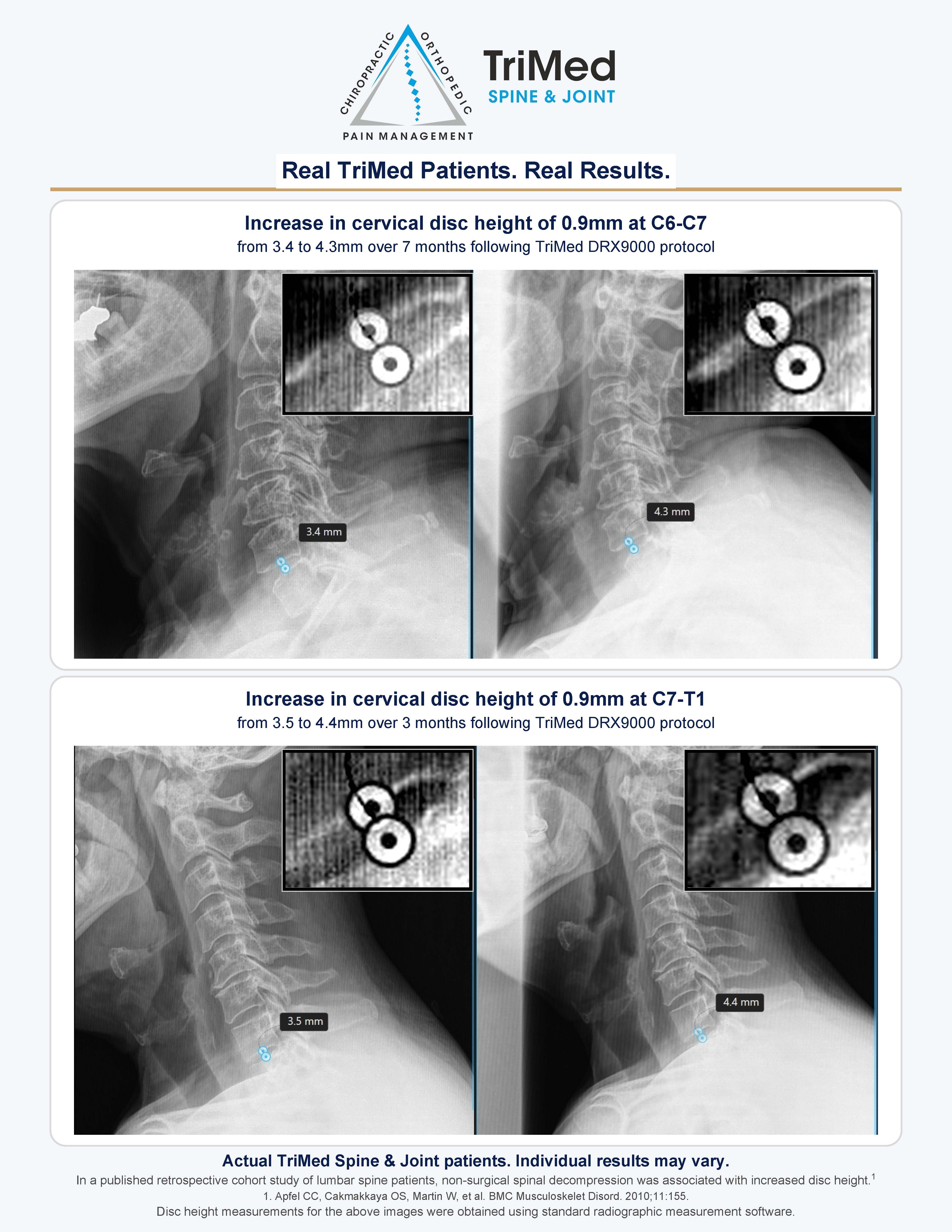
Below are actual x’rays with disc height measurements from TriMed Spine & Joint patients following the DRX9000 protocol under Dr. Cantor’s care:
- Cervical case 1: disc height at C6-C7 increased from 3.4mm to 4.3mm over 7 months
- Cervical case 2: disc height at C7-T1 increased from 3.5mm to 4.4mm over 3 months
- Lumbar case 1: disc height at L5-S1 increased from 11.9mm to 13.9mm over 2 months
- Lumbar case 2, over 2.5 months: disc height at L4-L5 increased from 9.7mm to 11.2mm. At L5-S1 it increased from 11.2mm to 12.7mm
CASE EXAMPLES — INDIVIDUAL RESULTS VARY
These fully de-identified radiographs show individual patients before and after completion of a DRX9000® spinal decompression protocol. Intervertebral discs cannot be directly visualized on X-ray and are therefore better evaluated with MRI. Disc-height measurements shown are software-measured, specific to these images and individual cases, and should not be interpreted as expected results, since outcomes vary from case to case. Radiographic appearance and measurements may be affected by patient positioning, anatomy, condition severity, degenerative changes, treatment compliance, and other individual factors. No particular clinical or radiographic outcome is promised or guaranteed.
CASE EXAMPLES — INDIVIDUAL RESULTS VARY
These fully de-identified radiographs show individual patients before and after completion of a DRX9000® spinal decompression protocol. Intervertebral discs cannot be directly visualized on X-ray and are therefore better evaluated with MRI. Disc-height measurements shown are software-measured, specific to these images and individual cases, and should not be interpreted as expected results, since outcomes vary from case to case. Radiographic appearance and measurements may be affected by patient positioning, anatomy, condition severity, degenerative changes, treatment compliance, and other individual factors. No particular clinical or radiographic outcome is promised or guaranteed.
As a chiropractor specializing in spinal decompression therapy, Dr. Cantor evaluates each patient individually, often using imaging and a physical exam. That assessment determines whether DRX9000 treatment is an appropriate option before any treatment plan begins.
Are you dealing with persistent back pain, neck pain, or nerve-related arm or leg pain? A consultation is the first step toward finding out whether spinal decompression therapy could help you too.
Individual results may vary.
Frequently Asked Questions About DRX9000 Spinal Decompression
How is DRX9000 spinal decompression different from ordinary traction?
Traditional traction applies a steady pull, which tends to make the surrounding muscles guard and resist. The DRX9000 applies and releases tension on a computer-controlled cycle with feedback. Muscles are therefore less likely to splint. The load is directed at the disc space rather than absorbed by muscle tension. That cycling is the main mechanical difference. It is why sessions are tolerated by patients who could not tolerate older traction tables.
What does a session feel like and how long does it take?
You lie clothed on the table in a harness while the machine gradually applies and eases tension. Most patients describe a stretching or pulling sensation across the low back or neck and nothing painful. A session generally lasts around twenty to thirty minutes. Many patients find the table comfortable enough to relax through it.
How many sessions are usually needed?
Spinal Decompression is delivered as a defined series rather than as ongoing care. The number of sessions depends on your imaging, how long the problem has been present, and how you respond. The case results shown above unfolded over periods ranging from two to seven months. Your doctor should re-examine you partway through. They should tell you whether continuing is justified rather than committing you to an open-ended plan.
Who is not a candidate for DRX9000 spinal decompression?
It is generally avoided in patients with:
- Spinal fracture
- Spinal instability or a significant slip
- Spinal tumor or infection
- Severe osteoporosis
- Prior fusion hardware at the level being treated
- Abdominal aortic aneurysm
- Pregnancy
- Progressive neurological loss, which needs surgical assessment instead
Where narrowing is caused by bone rather than by disc, spinal decompression does not address the cause. We will say so rather than sell you a course of care.
Do the disc height increases shown here mean my pain will go away?
Not automatically. Imaging change and symptom change do not always move together. Some patients feel considerably better with a modest measured change. Others show a clear increase in disc height while symptoms lag behind. The measurements above are real results from patients treated under Dr. Cantor at our Boca Raton office, obtained using standard radiographic measurement software. Individual results vary, and no outcome can be promised in advance.
Is spinal decompression covered by insurance?
Coverage for non-surgical spinal decompression varies considerably between plans, and many plans treat it as non-covered. We will check your specific benefits and give you the out-of-pocket figures before you start. That way the cost of the full series is clear up front rather than partway through.
Where is DRX9000 treatment performed?
The DRX9000 table is located at our Boca Raton office at 307 Via De Palmas. It is the only TriMed Spine and Joint location where spinal decompression sessions are performed. Patients who begin care at our Lauderhill, Hollywood or Delray Beach offices are scheduled in Boca Raton for their sessions. Call 1 (855) 4-TRIMED to arrange an evaluation.
About Author
