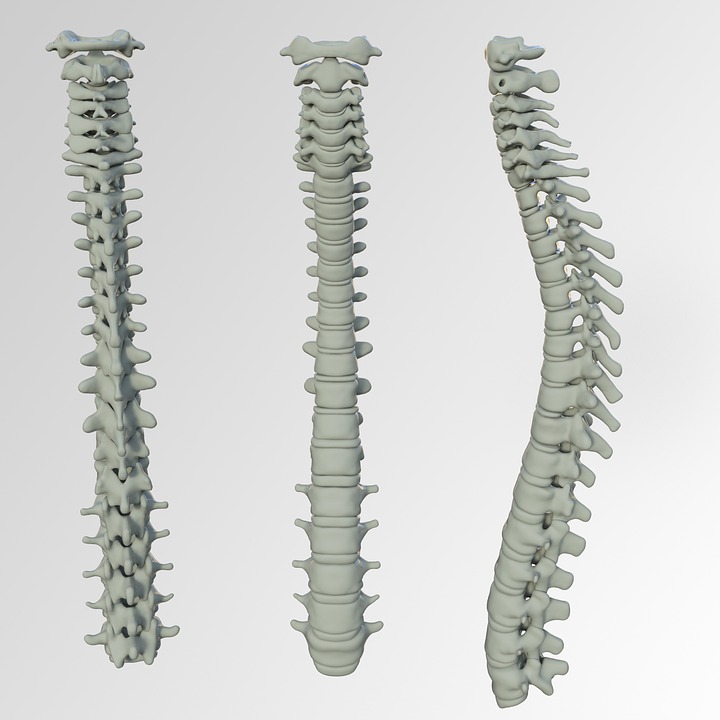
One of the most common treatments that we provide at TriMed Spine & Joint is that of disc injuries. The intervertebral discs are a prevalent source of lower back pain as they are one of the most frequently injured spinal structures. The discs connect adjacent spinal vertebrae together and provide a degree of shock absorption in the torso.
Disc Structure
The structure of the spinal disc resembles a jelly-filled doughnut. The inner aspect of the disc contains a gel-like substance called the nucleus pulposus. Surrounding the nucleus are tough fibrocartilagenous fibers called annulus fibrosis. These annular fibers contain the inner nuclear material similar to a basketball skin containing the air within.
Causes of Disc Injury
Disc injury occurs when the annular fibers of the disc are torn. Because the inner regions of the annulus lack “pain” innervation, injuries contained to the inner annulus occur without one’s knowledge.
Common causes of annular disc tears include:
- uncorrected spinal misalignments
- prolonged sitting
- poor postural habits
- poor lifting habits
- improper workstation setup and ergonomics
- improper lifting techniques
- extended periods of vibratory forces
The Three Main Types of Disc Injuries
The first disc injury consists of annular fiber tears which do not extend to the outer aspects of the disc. Thus, the inner nuclear material is prevented from completely escaping the disc.
The second type of disc injury, commonly referred to as a disc herniation, consists of annular tears which run from the innermost aspects of the annulus (where the nucleus is) to the outermost aspects of the annulus. In this type of injury, the pressurized nuclear material can squeeze through the tears in the annulus and escape to the outside of the disc. When this occurs, the nuclear material may come in contact with nearby spinal nerves and even the spinal cord.
In the third type of disc injury, referred to as a disc bulge, the inner nucleus loses hydration; common in those with prolonged spinal stress and the elderly. This results in “bulging” of the disc much like a tire “bulges” when it contains inadequate amounts of air. Similar to the previous injury, the nearby spinal nerves and spinal cord may become impinged from the bulging disc.
The Symptoms of Disc Injuries
The symptoms of disc injury depend upon the location of the disc tears and whether or not the spinal nerves or spinal cord are affected.
When tearing of the annulus occurs within its inner portion only, generally, pain is not experienced. As previously stated, this is because the inner regions of the annulus lack pain receptors. When tearing of the annulus occurs in the outer annular fibers, mild to excruciating pain is felt in a generalized manner. If a lumbar disc is affected, for instance, diffuse low back pain with associated paraspinal muscle spasm is typical.
When numerous partial tears coalesce to form tears that run clear through the thickness of the annulus, the gel-like nucleus is able to escape the disc. If a spinal nerve or the spinal cord is contacted the individual may experience symptoms of pain, numbness, tingling and/or weakness within either or both lower extremities. In rare cases patients may lose the ability to control bowel and bladder functions. If this occurs, immediate medical intervention is required as the condition can become permanent.
The Treatment of Disc Injuries
Disc injuries respond favorably to chiropractic care. This is because chiropractic treatments focus on the dysfunctional spinal segments and not just the symptoms of the disc injury. Pain killers, anti-inflammatory and muscle relaxants do nothing to treat the cause of disc injuries and have been shown to induce further injury.
Chiropractic treatments provide fast, effective, safe, and long-lasting relief from disc injuries. This is because the chiropractor’s approach focuses on restoring spinal alignment, spinal function, and overall spinal health, which are the primary factors responsible for the development of disc injuries.
Chiropractic doctors are experts in maintaining proper spinal alignment and function, both of which play a critical role in minimizing spinal stresses – the stresses that are responsible for injury and accelerated degenerative processes in spinal discs.
Hopefully, with this information, you are now more well-informed on the seriousness of disc structure and injury. At TriMed Spine & Joint as we do our best to provide a top-notch and quality chiropractic service for disc problems as well as so much more. Our friendly and knowledgeable office can identify your spinal issue and explain why your back or neck hurts. Then we help you find a fix fast.
Please share this information with anyone who might find it useful. Thank you for visiting the site. Do you need chiropractic care, spinal decompression, hyperbaric oxygen therapy, or interventional pain management? If so, contact us at one of our several South Florida offices.
Non-Surgical Treatment for Disc Injuries
If your disc injury has not responded to conservative care, ask about DRX9000 spinal decompression therapy. The DRX9000 is FDA cleared to treat herniated discs, bulging discs and degenerative disc disease. Call 1 (855) 487-4633 to schedule an evaluation with Steven Cantor DC.
Common Questions About Disc Injuries
What is the difference between a bulging disc and a herniated disc?
A bulge is a broad, even spread of the disc all the way around, while a herniation is disc material pushing out through a weakness in one focused spot. Our guide Your MRI Report, Explained illustrates the difference.
Does a disc injury always need surgery?
No. Most disc problems are managed without surgery, and even large herniations can shrink substantially over time with conservative care.
What symptoms suggest a nerve is involved?
Pain that travels into an arm or a leg, along with numbness, tingling or weakness, suggests a nerve root is being irritated rather than the back or neck alone. That pattern is what leads to a pinched nerve or sciatica diagnosis.
Can spinal decompression help a disc injury?
It is one option considered for disc-related cases. DRX9000 spinal decompression is FDA-cleared for herniated discs, bulging discs and degenerative disc disease, and is performed at our Boca Raton office after an examination and a review of your imaging.
When should I seek immediate care?
Get emergency medical attention for progressive weakness in a limb, numbness in the groin or inner thighs, or any loss of bowel or bladder control.
About Author
